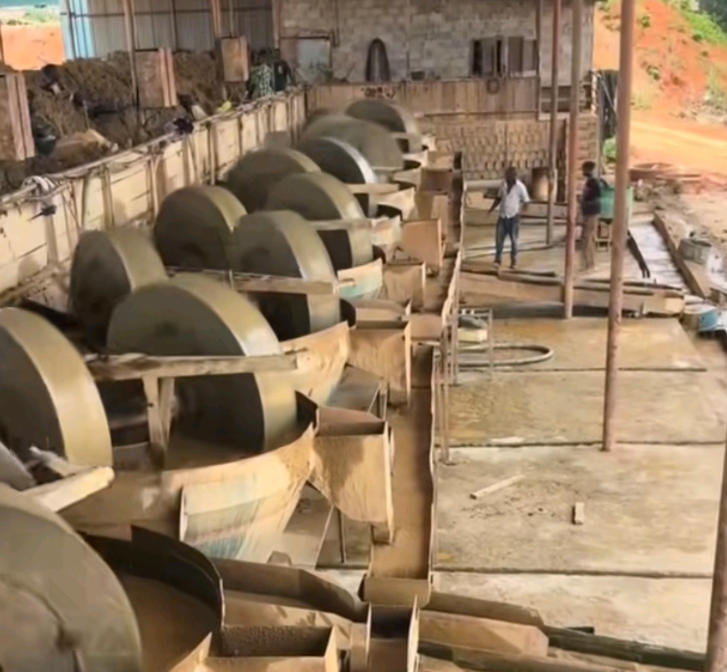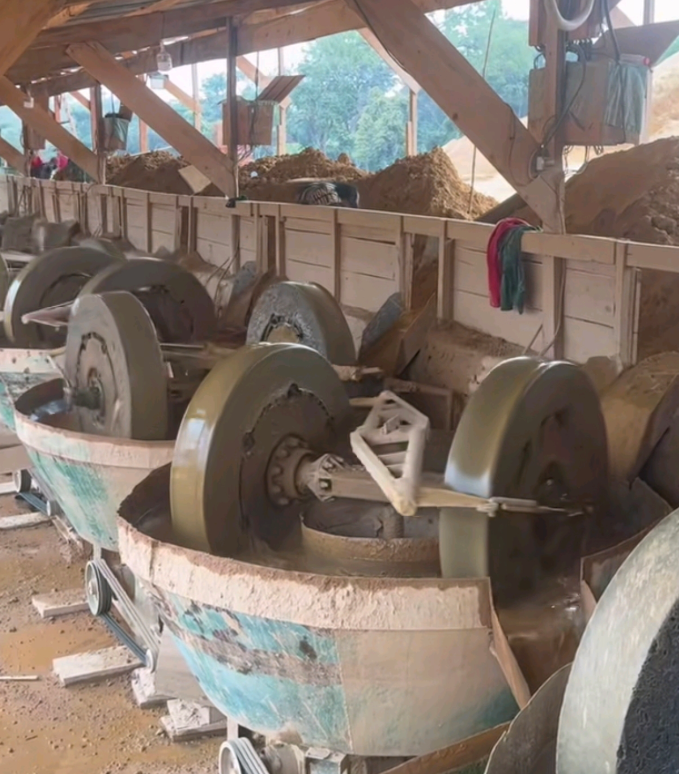
A wet pan mill does one job well: it grinds ore until gold is liberated from the rock holding it. What it cannot do is hold on to everything it liberates. A measurable share of the fine gold — and, if your circuit uses amalgamation, residual mercury — leaves with the tailings.
Putting a centrifugal concentrator behind the mill is the standard way to get that material back. It is a two-stage gravity circuit: the mill liberates, the concentrator recovers, and nothing is lost to a settling pond that could have been caught in a bowl.
This article covers how the pairing works, the five parameters that decide whether it performs, how it compares with a shaking table, and what to do if amalgamation is still part of your process.
Why Tailings Still Carry Gold
Two things limit what a pan mill can recover on its own.
The first is liberation. Gold locked inside a host mineral never sees the mercury or the water; it leaves with the gangue regardless of how long you grind. The second is retention. Even fully liberated fine gold has to be captured by something — and a pan mill’s capture mechanism is weak on particles below roughly 100 microns.
That second number is where a concentrator earns its place. Centrifugal units generate an enhanced-gravity field many times stronger than a sluice or a pan, which is enough to hold particles that would otherwise wash straight through.
What Each Machine Does
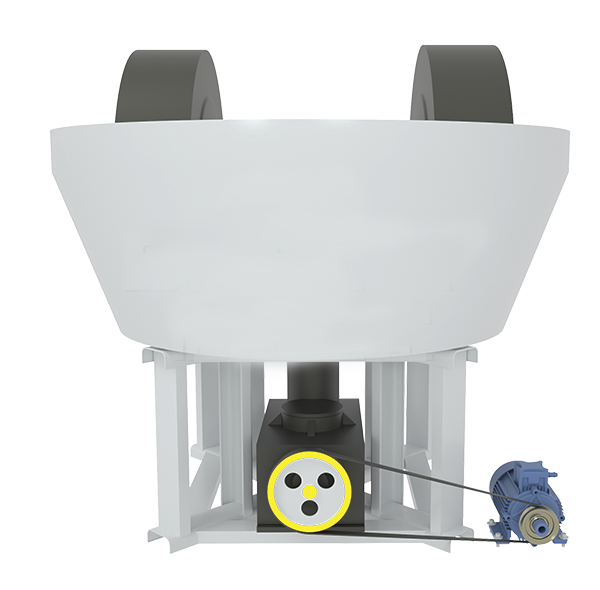
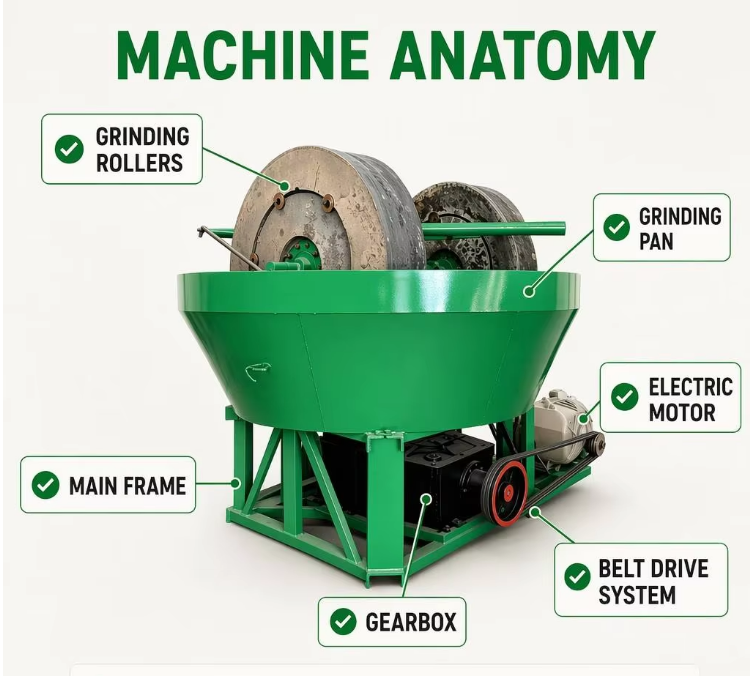
The wet pan mill: grinding and liberation
The mill’s contribution is mechanical. Ore is reduced against the pan by rotating wheels, and gold is freed from its host. On a wet pan mill this happens wet, which keeps dust down and lets the pulp flow straight into the next stage without drying.
The mill’s output is a slurry — not a concentrate. Everything downstream depends on what that slurry contains.
The concentrator: catching what the mill releases
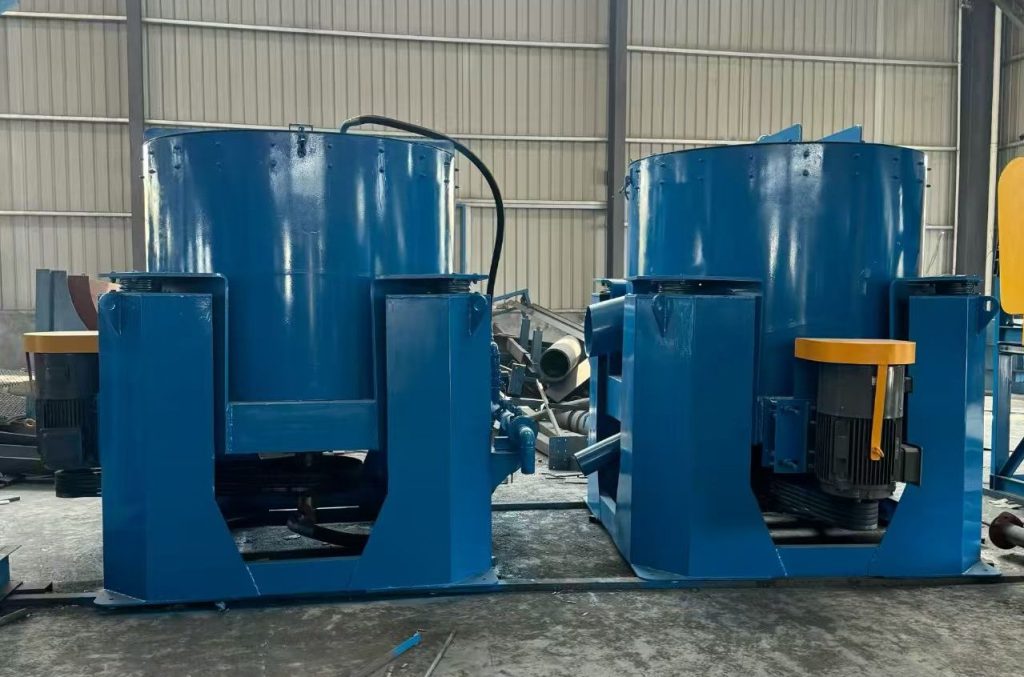
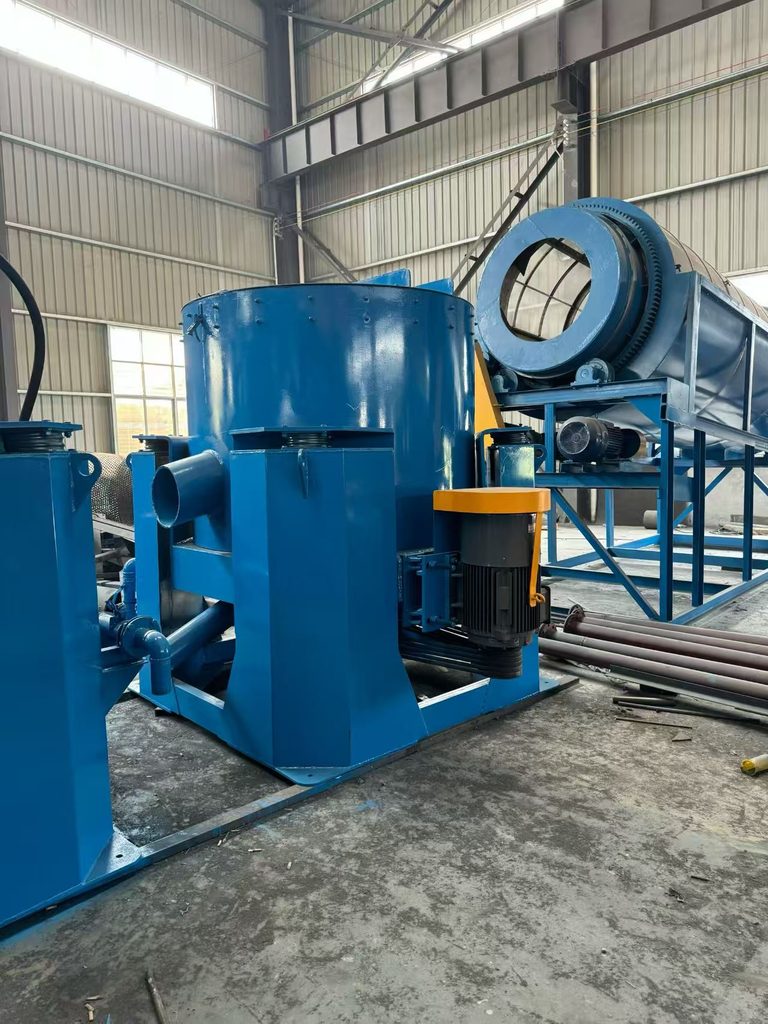
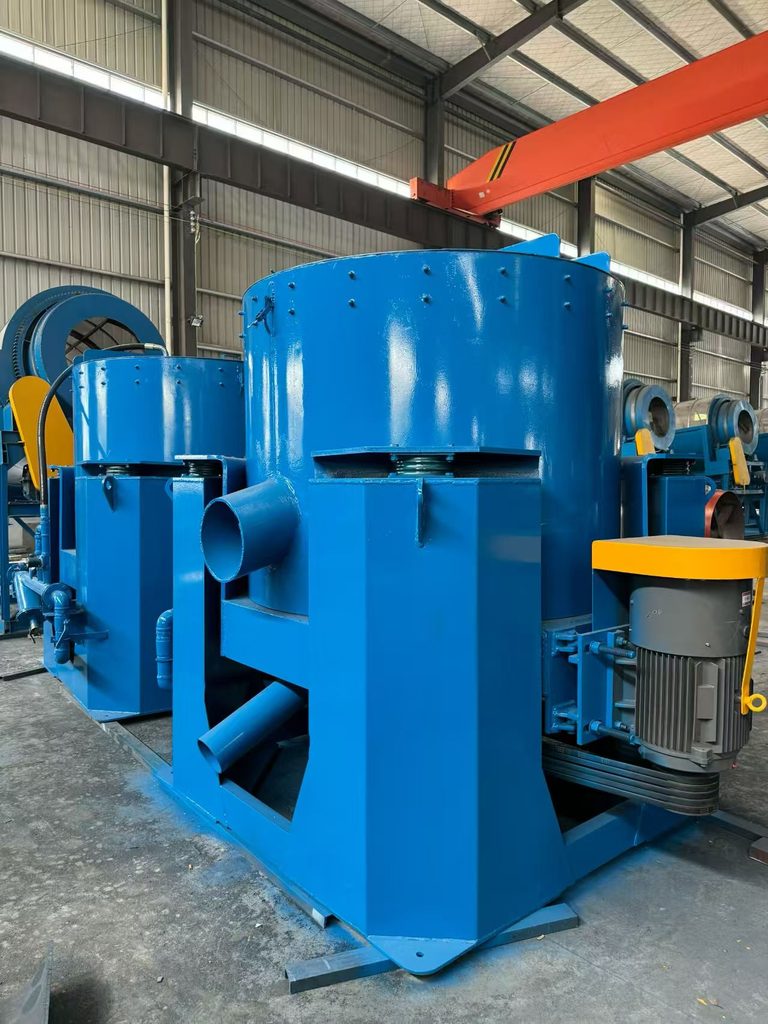
A centrifugal concentrator takes the mill’s tailings slurry and spins it. Heavy particles — gold, and mercury or amalgam if present — are driven outward and trapped in the bowl’s riffles or fluidised bed. Lighter sand is carried up and out.
On the STLB series we supply, feed is limited to 6 mm, which in practice means the mill’s discharge usually needs screening or classification before it enters the bowl. That constraint is not a limitation of the method — it is the size at which the fluidised bed can still hold fine gold without packing solid.
Where the concentrate leaves the bowl
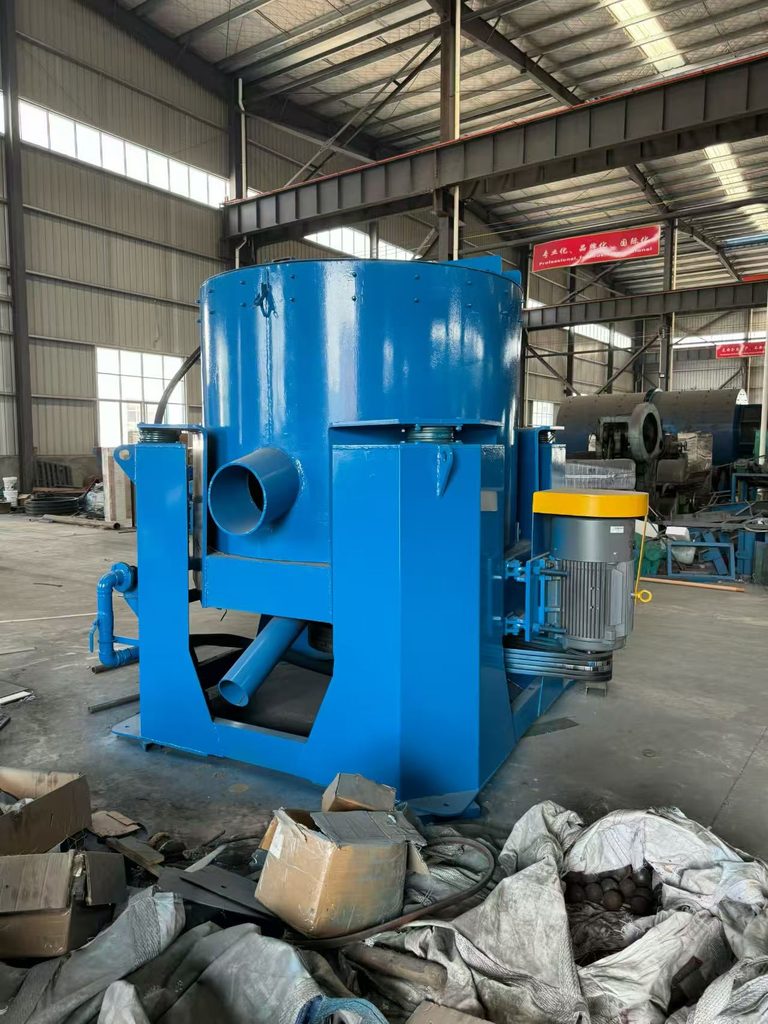
On a batch concentrator, the split is straightforward: light waste sand exits from the outer discharge, while the heavy concentrate collects at the bottom and is drawn off through the central port at the end of a cycle.
That geometry is what makes the unit useful for tailings work — you are not trying to recover a salable product in one pass, you are trying to shrink a large volume of low-grade slurry into a small volume of high-grade concentrate that a shaking table can finish.
How to Run the Pairing
Feed
Route the mill’s tailings slurry into the concentrator, but control two things before it arrives: pulp density and particle size.
Density that is too high turns the feed into a paste that blinds the riffles. Oversize particles — anything above the bowl’s rated feed size — lodge in the bed and reduce capture for everything behind them. A screen or a classifier ahead of the concentrator solves both.
Concentration
Inside the bowl, centrifugal force does the sorting. Heavy minerals settle into the collection zone; light sand is flushed out continuously. The unit runs until the collection zone is loaded, then stops for discharge.
Discharge and recovery
Concentrate is taken off in batches from the bottom port. If the material contains mercury or amalgam, that handling step is where exposure risk concentrates — it should happen in a sealed, ventilated arrangement, never in the open.
What the cycle time buys you
In field practice, operators report that separating mercury from a batch of concentrate by hand can take one to two hours, while a concentrator throws off the water and lighter material in minutes, leaving a much smaller volume to deal with. That time saving is real, but treat the specific figure as an observation from operating sites rather than a universal constant — it depends heavily on batch size and how much amalgam is present.
Five Things That Decide Whether It Works
1. Particle size and sliming. Too much fine clay coats the collection zone and blinds it. If your ore slimes heavily, de-sliming or classification ahead of the bowl is not optional.
2. Speed and centrifugal force. Higher speed increases the force holding fine gold, but it also drags light sand into the concentrate and raises power draw. Too low and the fines simply pass through. The setting has to be tuned against your own ore, not copied from another site.
3. Backwash water and jacket pressure. Water injected through the bowl keeps the bed fluidised and prevents it from packing. Get it right and fine gold penetrates and is captured; get it wrong and the bed either consolidates or blows through. On water-jacketed units this is the parameter operators adjust most often.
4. Feed stability. Fluctuating density or flow rate destroys separation. A buffer tank and a consistent feed arrangement matter more than most operators expect.
5. Maintenance. Worn riffles, scored bowls and blocked ports all reduce capture quietly — the machine keeps running and the numbers drift down without an obvious failure. Regular cleaning and inspection is part of the process, not an afterthought.
Concentrator vs Shaking Table vs Sluice
These three are often presented as alternatives. In practice they do different jobs.
| Equipment | Strength | Weakness | Best role |
|---|---|---|---|
| Centrifugal concentrator | Fast, compact, strong on fine gold; high volume reduction | Lower upgrade ratio; concentrate still needs cleaning | Roughing and scavenging |
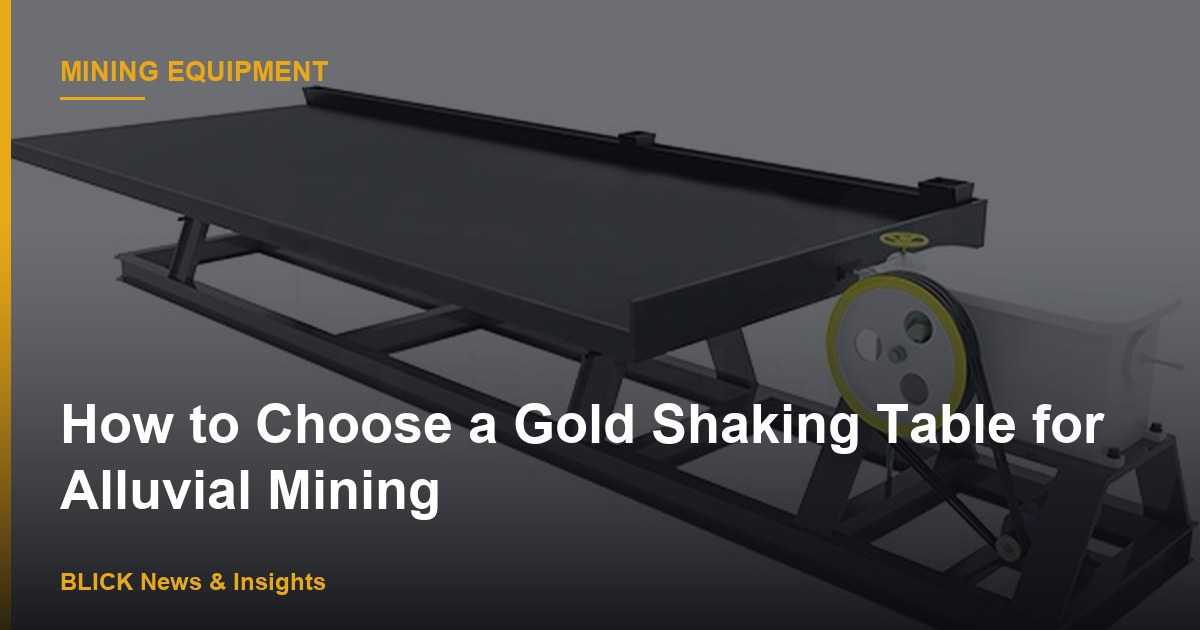
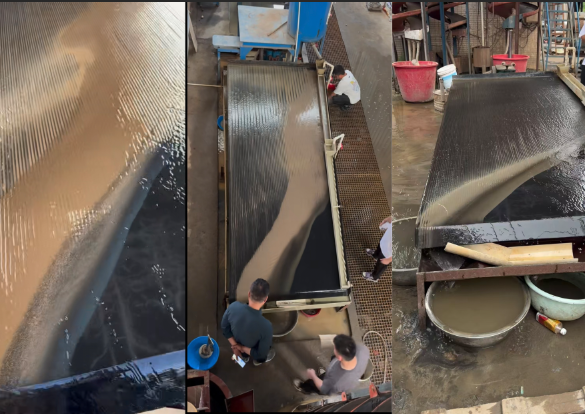
| Shaking table | High upgrade ratio, stable concentrate grade | Large footprint; sensitive to feed fluctuation | Final cleaning |
| Sluice | Cheap, simple, low maintenance | Poor on fines; high gold loss below ~100 µm | Coarse roughing only |
The practical chain is mill → concentrator → shaking table. The concentrator does the volume reduction and catches the fines; the 6S shaking table takes that small concentrate to a salable grade. Running a table on raw mill tailings instead would mean feeding it far more material than it can handle, at a grade too low to separate cleanly.
If Your Circuit Still Uses Mercury
A concentrator is often fitted specifically because a site is moving away from amalgamation — the unit recovers the fine gold that mercury was previously used to capture, without the mercury.
If amalgamation is still in your circuit, the safety points below are not optional.
The hazard is the vapour, not the liquid. Mercury vapour is acutely neurotoxic and causes cumulative kidney damage. It is released whenever amalgam is heated, and it is odourless — you cannot smell your way to a safe working level.
Contain it. Amalgamation, pressing and retorting belong inside a sealed, negatively ventilated enclosure with off-gas capture. Open roasting of amalgam — the practice still seen at some small operations — is the single most dangerous step in the process and should never be done in the open.
Protect and collect. Operators need appropriate respiratory and skin protection. Floors should be sealed and washed routinely, and the site needs dedicated mercury collection and wastewater treatment so nothing migrates into soil or groundwater.
Expect regulation. Mercury use in artisanal and small-scale gold mining is restricted under the Minamata Convention, and national limits on mercury emissions and occupational exposure are tightening almost everywhere. Operators who build a mercury-dependent circuit today are building something they will have to replace.
The alternative is already proven: a gravity circuit — mill, concentrator, table — recovers the same fine gold without the exposure, the reporting burden, or the buyer objections. That is why the mercury-free gravity route is now the default recommendation for new installations rather than a niche option.
Commissioning Checklist
Before you buy anything, characterise the ore:
- Size analysis and gold deportment. You need to know what fraction the gold sits in. If most of it is below 38 µm, a concentrator is the right tool; if it is locked in sulphides, gravity alone will not reach it.
- Test at small scale. Run speed, density and feed-rate trials on your own material and choose the setting on the recovery-versus-grade trade-off, not on a single headline recovery number.
- Design for containment. If any mercury remains in the circuit, plan sealed handling, off-gas condensation and wastewater treatment from the start — retrofitting is far more expensive.
- Instrument the circuit. Sample concentrator feed, concentrate and tailings regularly. Drift in tailings grade is the earliest signal that a bowl needs cleaning or a riffle needs replacing.
Building the Circuit
If you are running pan mills and losing fine gold to tailings, the fix is usually a concentrator sized to your mill discharge — and a table to finish what it produces.
Send us your ore type and target throughput and we will size the two-stage circuit around it, or review complete process line designs if you are starting from run-of-mine.
BLICK Industries builds wet pan mills, STLB centrifugal concentrators and 6S shaking tables in our own factory and ships direct to gold operations