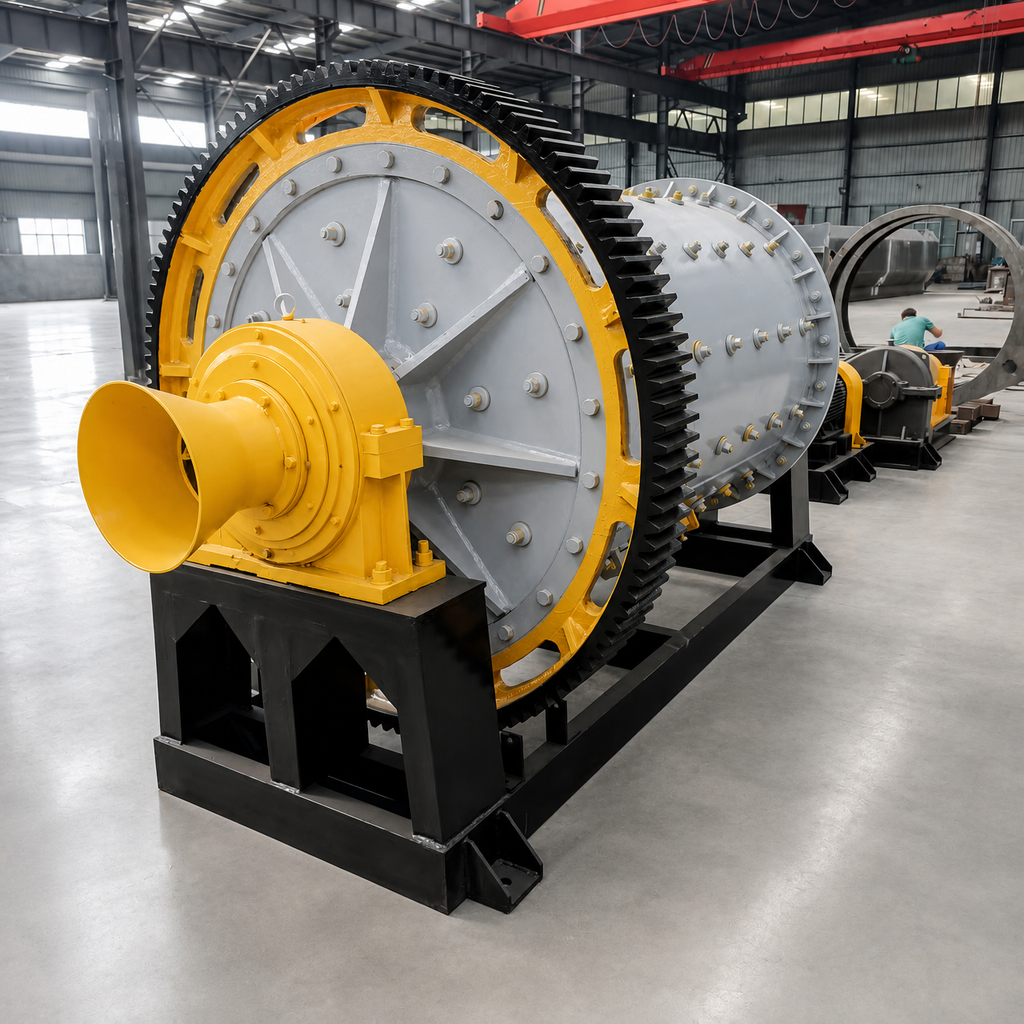
Ball mill output fineness is set by five variables in dry milling — steel ball grading, mill ventilation, classifier speed, feed size and the condition of the partition plate — and by four in wet milling: pulp density, feed rate, mill rotational speed and the classification circuit. If the product runs too coarse, check ball grading and airflow first. If the product suddenly gets finer while throughput drops, check the partition plate.
Why fineness is a window, not a target
Grinding is the last stage where you can still lose the gold — and the first stage where you can waste the most power. Run too coarse and locked particles travel all the way to the tailings. Run too fine and you pay for energy you did not need, generate slimes that are hard to recover on gravity equipment, and push reagent consumption up in a leaching circuit.
So the goal is never “as fine as possible”. It is the narrowest size range your downstream process can still recover efficiently. Everything below is about how to move the product within that window — and which lever to reach for first.
Dry ball mill: five control points
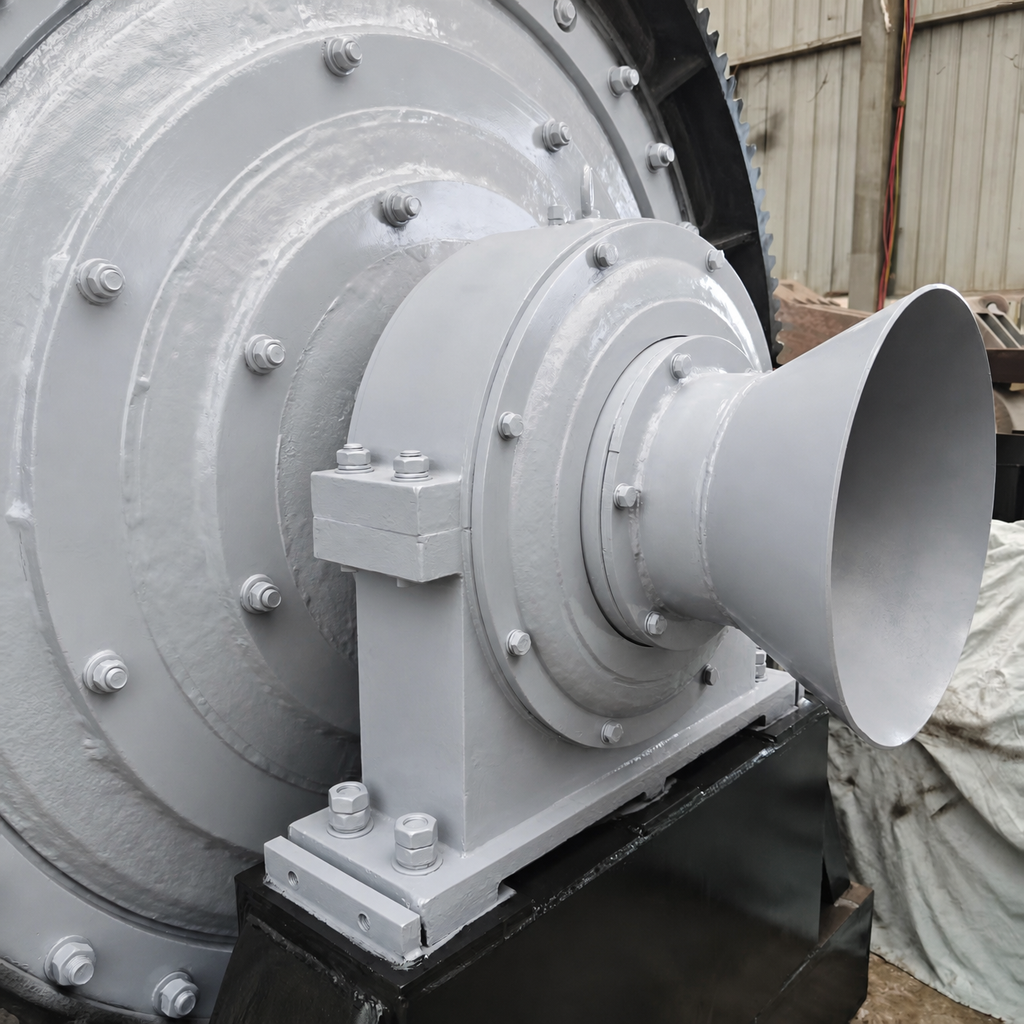
1. Steel ball grading
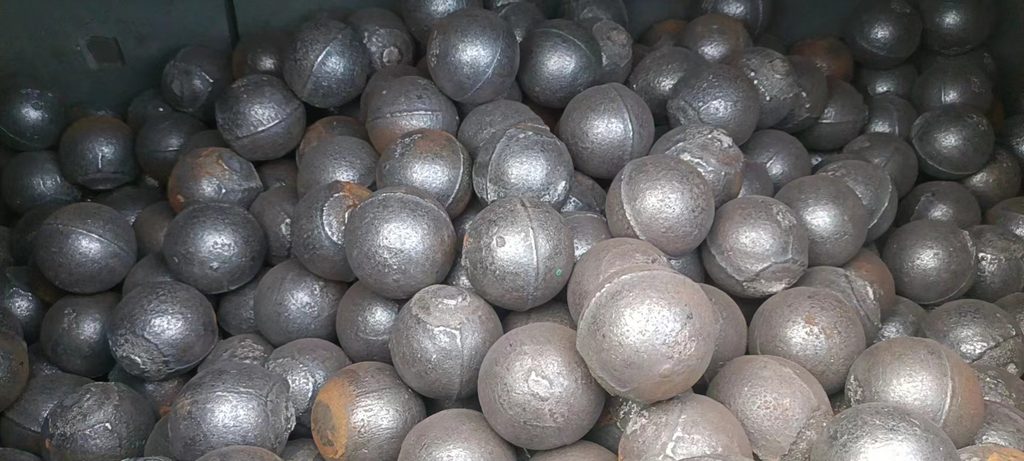
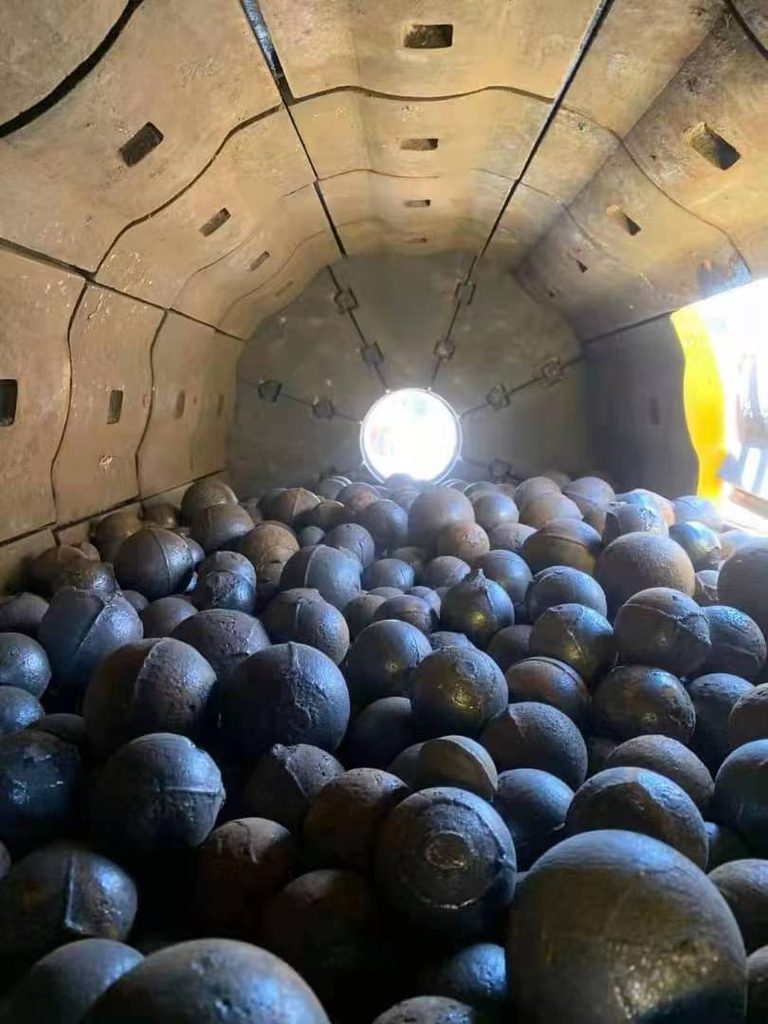
The media charge decides how the material is ground. If the material leaving the mill is too coarse, the charge contains too many large balls — reduce the large-ball proportion and add small balls. If the material is coming out too fine, do the reverse: reduce the small balls and add large ones.
2. Mill ventilation (airflow)
Internal airflow controls how fast material is carried out of the mill. When the discharge is too coarse, the airflow is too high — reduce it. When the discharge is too fine, the airflow is too low — increase the ventilation.
3. Classifier speed (closed-circuit systems)
In a closed-circuit grinding system, the classifier is the fineness control point. Higher classifier speed gives a finer finished product; lower speed gives a coarser one.
4. Feed size entering the mill
The initial particle size of the feed determines how long the material must stay in the mill to be reduced. Coarser feed takes longer to break down, so the discharge comes out coarser. Finer feed reaches the target size sooner, so the discharge comes out finer.
5. Partition plate blockage (multi-chamber mills)
If the discharge gets finer and tonnage drops noticeably at the same time, check the partition plate first. A blocked plate slows material movement through the mill, residence time stretches far beyond design, and the product gets over-ground while output falls — often with reduced moisture removal as well.
Dry-milling quick diagnosis
| Symptom | Likely cause | Correction |
|---|---|---|
| Discharge too coarse | Too many large balls in the charge | Reduce large balls, add small balls |
| Discharge too coarse | Internal airflow too high | Reduce ventilation |
| Discharge too coarse | Classifier speed too low | Increase classifier speed |
| Discharge too coarse | Feed entering the mill too coarse | Reduce feed size to the mill |
| Discharge too fine and output down | Partition plate blocked | Inspect and clear the partition plate |
Wet ball mill: four control points
1. Pulp density
Pulp density drives slurry mobility and therefore residence time. A denser pulp stays in the mill longer and the discharge gets finer. A thinner pulp flows more freely, leaves sooner, and the discharge gets coarser.
2. Ore feed rate
Feed rate works in reverse against fineness. Push more tonnage through the mill and the discharge gets coarser; cut the feed rate and the discharge gets finer.
3. Mill rotational speed
Wet mills are normally fitted with variable-speed drives, so the operating speed can be adjusted within roughly 65% to 75% of critical speed. Increasing mill speed produces a finer discharge; reducing it produces a coarser one.
4. Classification circuit
Wet grinding circuits are almost always paired with classification equipment — typically hydrocyclones. The final cut point of the discharge is set by the hydrocyclone and its pump system, not by the mill alone.
Wet-milling quick diagnosis
| Symptom | Likely cause | Correction |
|---|---|---|
| Discharge too coarse | Pulp density too low | Increase pulp density |
| Discharge too coarse | Feed rate too high | Reduce ore feed rate |
| Discharge too coarse | Mill speed too low | Increase speed (stay within 65–75% of critical) |
| Product unstable | Classification circuit out of balance | Re-trim the hydrocyclone and pump settings |
Dry vs wet: which lever actually sets fineness
| Control lever | Dry milling | Wet milling |
|---|---|---|
| Media charge (ball grading) | Primary control | Primary control |
| Residence time | Set by airflow | Set by pulp density and feed rate |
| Mill speed | Usually fixed | Adjustable via variable-speed drive, 65–75% of critical |
| Final cut point | Classifier (separator) speed | Hydrocyclone and pump circuit |
| Feed size | Directly shifts product size | Directly shifts product size |
| Fastest useful diagnostic | Finer product + lower output → partition plate | Product drifting → density and feed rate |
FAQ
Why is my ball mill discharge too coarse? Work through the levers in order: ball grading (too many large balls), airflow (too high), classifier speed (too low), then feed size (too coarse). On multi-chamber mills, also confirm the partition plate is clear before changing anything else.
Why did my product suddenly get finer while tonnage dropped? On a multi-chamber mill this is the classic signature of a blocked partition plate. Material cannot leave the mill fast enough, residence time stretches, and the product is over-ground while output falls. Inspect and clear the plate — do not compensate by adjusting ball grading.
Does running the mill faster give a finer product? In wet milling, yes. Mills with a variable-speed drive can be run within about 65–75% of critical speed; increasing speed drives a finer discharge and decreasing it gives a coarser one. Dry mills generally run at fixed speed, so use airflow and classifier speed instead.
Can I control fineness with the hydrocyclone alone? In a wet circuit the hydrocyclone and pump set the final cut point, so trimming them does change the product. But if the mill itself is over- or under-grinding, adjusting the cyclone only moves the problem downstream. Balance the mill first, then fine-tune on the circuit.
Should I confirm the target size in a lab before tuning? Yes — a bench-scale grind and sieve analysis tells you what the ore actually needs, so you are tuning toward a measured target instead of by feel.
Set the target size on a test, not a guess
Tell us your ore type and your target mesh, and we will size the mill, the media charge and the classification circuit as one system. Our MQ series ball mills cover 900×1800 up to 1830×4500, built with energy-saving rolling bearings and replaceable wear liners.
- MQ series ball mills for gold ore — dry and wet configurations, factory-direct
- Laboratory ball mills and sieve analysis equipment — confirm your target size before you tune the plant
- Send us your ore and target mesh — we will come back with a mill and circuit recommendation